


Sova - Zero Drop
Sova - Zero Drop
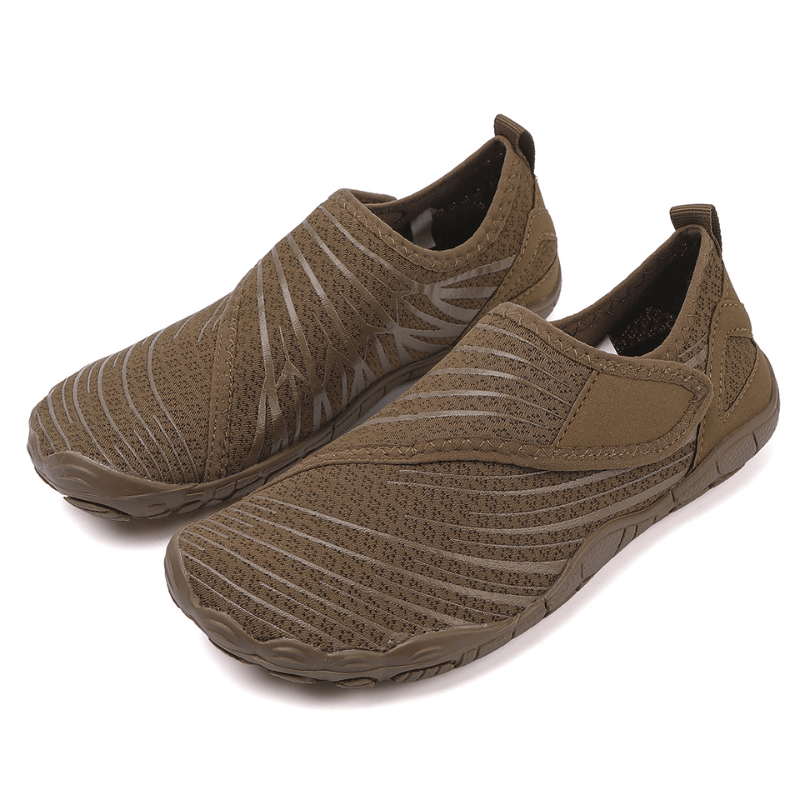
Zero Drop, Wide Toe Box Barefoot Shoe





Bundle promotion valid until 11:59 PM EST
Couldn't load pickup availability

Sova - Zero Drop
Details
Details
The Sova's wide toe box lets your toes splay naturally, redistributing pressure away from the inflamed heel and arch. The zero-drop flat sole removes the artificial heel lift that keeps your Achilles chronically tight, addressing the root cause of plantar fasciitis, not just the pain. Breathable, lightweight, and slip-on for all-day relief.
Shipping
Shipping
Express Shipping Times:
- United States: 4 - 7 days
- Canada: 6 - 10 days
Standard Shipping Times:
- United States & Canada: 7 - 20 days
- Europe: 7 - 15 days
- Latin America: 10 - 20 days
- Other countries: 12 - 30 days
Returns and Exchanges
Returns and Exchanges
You can return any Vivaro product in its original packaging within 60 days of purchase for a full refund. A proof of purchase and a return tracking number are required to process the refund.


Sizing Chart
| US Men | US Women | EU | Foot Length (in) | Foot Width (in) |
|---|---|---|---|---|
| 3 | 5 | 35 | 8.4 | 3.3 |
| 3.5 | 5.5 | 35 | 8.5 | 3.3 |
| 4 | 6 | 36 | 8.6 | 3.3 |
| 4.5 | 6.5 | 37 | 8.7 | 3.3 |
| 5 | 7 | 37 | 8.8 | 3.3 |
| 5.5 | 7.5 | 38 | 9.0 | 3.4 |
| 6 | 8 | 38 | 9.1 | 3.4 |
| 6.5 | 8.5 | 39 | 9.3 | 3.4 |
| 7 | 9 | 39 | 9.5 | 3.4 |
| 7.5 | 9.5 | 40 | 9.6 | 3.5 |
| 8 | 10 | 40 | 9.8 | 3.5 |
| 8.5 | 10.5 | 41 | 9.9 | 3.5 |
| 9 | 11 | 41 | 10.1 | 3.6 |
| 9.5 | 11.5 | 42 | 10.2 | 3.6 |
| 10 | 12 | 42 | 10.4 | 3.6 |
| 10.5 | 12.5 | 43 | 10.5 | 3.7 |
| 11 | 13 | 43 | 10.7 | 3.7 |
| 11.5 | 13.5 | 44 | 10.9 | 3.7 |
| 12 | 14 | 44 | 11.0 | 3.8 |
| 12.5 | 14.5 | 45 | 11.2 | 3.8 |
| 13 | 15 | 45 | 11.4 | 3.8 |
| 13.5 | 15.5 | 46 | 11.6 | 3.9 |
Give your customers further information about choosing the correct size.

after years of
over-support

gradually
strengthened
Why other barefoot shoes fail
Why Most Barefoot Shoes Make Plantar Fasciitis Worse
(And Why the Sova Doesn't)
Other barefoot shoes ignore the foot that's been damaged by years of over-support. Switching too fast puts a weak, atrophied foot into a demanding shoe it isn't ready for. The fascia flares. The pain comes back. And people blame barefoot shoes entirely.
That's the Dead Foot Cycle. And it's why most people fail with barefoot shoes. Not because the concept is wrong, but because the shoe doesn't account for where their foot actually is.
Real People. Real Relief.
The barefoot shoe that finally works for plantar fasciitis sufferers.

"I've had plantar fasciitis for three years. I tried orthotics, stretches, everything. Two weeks in these and I walked through the grocery store without stopping. I actually cried in the parking lot."

"My podiatrist told me I'd need inserts forever. I decided to try these instead and now I'm walking my dogs every morning again. My feet feel stronger than they have in years."

"I was so skeptical. I've bought five different barefoot shoes off Amazon and they all made it worse. These are different. My heel pain is almost completely gone after three weeks."

"The first morning I didn't limp to the bathroom I texted my sister immediately. I've been dealing with that first-step pain for two years. These shoes are the only thing that's made a real difference."

"I'm a nurse and I'm on my feet for 12-hour shifts. I bought these on a whim and I genuinely cannot believe how much better my feet feel by the end of the day. My coworkers are all asking me about them."

"Bought these for my morning walks after my PT recommended barefoot shoes. My arch pain went from a 7 out of 10 every morning to basically zero within a month. The wide toe box is everything."

"I ordered two pairs immediately after the first week. I've tried compression socks, night splints, cortisone shots. Nothing worked long term. These are the first thing that have actually made my foot feel normal again."

"My doctor wanted to talk about surgery. I asked for 90 days to try something first. At day 45 in the Sova I cancelled the follow-up. My heel doesn't hurt anymore. I'm genuinely shocked."

"I've had both feet affected for four years. I wear these every single day now. The toe box is so roomy my toes aren't crammed together for the first time ever. My feet feel like they can finally breathe."

"Honestly I bought these thinking they'd be another disappointment. My plantar fasciitis has been chronic for five years. By week two I noticed I wasn't dreading getting out of bed. Now I'm back to my evening walks."

"I teach elementary school so I'm standing on hard floors all day. The pain was unbearable by 2pm every day. I've been wearing the Sova for six weeks and I actually make it through the full day now without sitting down constantly."

"These feel completely different from every other barefoot shoe I've tried. My foot sits flat and my toes have actual room. The heel pain that used to wake me up at night is gone. I'm on my second pair."

"My physical therapist told me to strengthen my foot muscles but every shoe I wore kept them weak. The Sova is the first shoe that actually let my foot do the work. The difference in six weeks has been remarkable."

"I'm 58 and I thought chronic foot pain was just part of getting older. My daughter bought me these and I want to cry thinking about the years I wasted in the wrong shoes. My mornings are completely different now."
Your Journey with the Sova
Here's what to expect as your foot muscles begin to reawaken, one week at a time.
Your Foot Starts to Wake Up
The zero-drop sole puts your heel and forefoot on the same level for the first time in years, beginning to decompress your Achilles. The wide toe box lets your toes splay naturally on every step. You may notice a new awareness in your arch, that's your intrinsic foot muscles firing for the first time in a long time. Some mild fatigue in the arch is normal and a sign the right muscles are engaging.
Morning Pain Starts to Shift
The sharp, nail-like first-step pain begins to ease. As your calf and Achilles lengthen with daily wear, the passive tension pulling on your plantar fascia starts to reduce. Customers commonly report that the dread of getting out of bed feels different, not gone yet, but noticeably less. Your foot is beginning to bear load the way it was designed to.
You Start Moving Again
Intrinsic foot muscles are now meaningfully stronger. Improved blood flow through the toe splay is reducing inflammation in the fascia tissue. Many customers notice they're making it through grocery runs, standing to cook dinner, or walking the dog without stopping. The burning that used to build through the afternoon starts to quiet down.
Real, Lasting Relief
By week eight, your foot's own architecture is doing the work it was designed to do. The Dead Foot Cycle is broken. Customers describe waking up and putting their feet on the floor without bracing for pain, and then being surprised when nothing happens. Your arch is stronger, your Achilles is longer, and your plantar fascia is finally under the right load. Not masked. Actually better.
Frequently Asked Questions
Most shoes — including expensive orthotics and cushioned runners — treat plantar fasciitis by absorbing the pain, not addressing the cause. The Sova works differently. The zero-drop sole gradually decompresses your Achilles tendon, which research shows can double the tension on your plantar fascia when shortened. The wide toe box lets your toes splay naturally, reactivating the intrinsic foot muscles that have been switched off by years of over-supportive footwear. Instead of doing the work for your foot, the Sova gives your foot the conditions it needs to heal itself.
Most customers notice a shift in their morning first-step pain between weeks 3 and 4. By weeks 5 to 6, many report getting through grocery runs, full workdays, and evening walks without stopping. Meaningful, lasting relief typically builds over 6 to 8 weeks — because the Sova is strengthening and reawakening your foot muscles, not masking pain. Results depend on how long you've had plantar fasciitis and how consistently you wear the shoe.
We recommend starting with 2 to 3 hours per day in the first week and gradually increasing from there. Because the Sova activates foot muscles that have been dormant, wearing them all day immediately can cause arch fatigue — which is a sign the right muscles are working, but too much too soon. By week 3 to 4, most customers wear them all day comfortably. Think of it like going to the gym: you wouldn't max out on day one.
This is the most common concern we hear — and it's completely valid. The reason most barefoot shoes fail plantar fasciitis sufferers is what we call the Dead Foot Cycle: years of over-supportive footwear leave your intrinsic foot muscles too weak to handle a barefoot shoe right away. Most barefoot shoes strip away support without accounting for this. The Sova's anatomically mapped wide toe box and gradual zero-drop transition are designed specifically to give weakened feet the right stimulus at the right load — so your muscles rebuild without shocking already-inflamed tissue. Starting slowly (see above) is the key.
Yes, but with care. If you're currently in an acute flare — where even standing for five minutes causes sharp pain — we recommend starting with very short wear sessions (30 to 60 minutes) and building up slowly over several weeks. Many of our customers were at the crawling-to-the-bathroom stage before trying the Sova and found gradual daily wear to be the turning point after years of failed treatments. If you have a specific medical condition or are post-surgery, consult your podiatrist before transitioning to minimalist footwear.
We recommend a gradual transition rather than a cold switch. Orthotics have been doing the work your foot muscles should be doing — dropping them immediately can cause a shock to already-weakened tissue. Wear the Sova for a few hours each day while continuing your orthotics in other shoes, and increase Sova time week by week. Most customers naturally phase out their orthotics over 4 to 6 weeks as their foot strength builds and the morning pain reduces.
Some mild arch fatigue in the first week or two is completely normal and actually a positive sign. It means your intrinsic foot muscles — the small muscles under your arch that have been inactive for years — are finally engaging. This feels different from the sharp, stabbing plantar fasciitis pain. If you experience sharp or worsening heel pain, reduce your wear time and build up more gradually. True arch muscle fatigue typically fades within a few days as your foot adapts.
The Sova runs true to size. We recommend measuring your foot length while standing — your foot spreads slightly under body weight — and selecting the size that matches or is just above your measurement. Our size guide covers US Women's 5 through 15.5 and US Men's 3 through 13.5. If you're between sizes, size up. The wide toe box is intentional and should feel noticeably roomier than your regular shoes — that's exactly the point.
We offer a 60-day risk-free trial. If you've worn the Sova consistently for 60 days and haven't experienced meaningful improvement, contact our team and we'll make it right. We stand behind the science behind this shoe and we want you walking pain-free — not stuck with something that didn't work. Returns are easy and hassle-free.
We hear this more than anything else. Orthotics, cortisone shots, dry needling, 15 pairs of Hokas, night splints — and still waking up unable to put your feet on the floor without bracing. The reason those things don't work long-term is that none of them retrain your foot. They treat the symptom, not the mechanics. The Sova is the only intervention that addresses all five root causes simultaneously — Achilles length, toe splay, intrinsic muscle activation, gait mechanics, and proprioception. That's why it works for people who've tried everything else. And with our 60-day guarantee, there's nothing to lose by trying.